

In Memoriam: George Smith
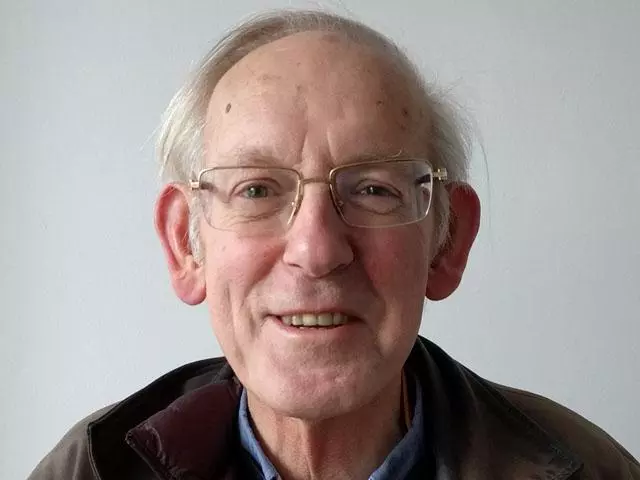
Professor George Smith
Born in 1941, George Smith read Greats (Classics) at St Edmund Hall College, Oxford, graduating with a First in 1964. He worked as a teacher in South India as part of Voluntary Service Overseas between 1964 and 1966, before returning to England to study sociology at Nuffield College in 1969. Together with his wife, the late Teresa Smith, he joined Barnett House, the forerunner of the Department of Social Policy and Intervention (DSPI), in 1970 where he remained until his retirement in 2008.
During his tenure at the University of Oxford, George Smith was a University Reader in Social Policy and Research Fellow at Green College (now Green Templeton). He served as Head of DSPI from 2005 to 2007, and earlier as the department's research coordinator and course director for the Comparative Social Policy graduate degrees. He was one of the co-authors, with Liz Peretz and Teresa Smith, of the 100-year history of Barnett House and wrote with Teresa about A.H. Halsey and his contribution to Oxford.
George was instrumental in expanding the department's focus on policy, as well as in furthering its meticulous and pioneering approach to measurement methodology. He was also key to developing its style and culture, promoting serious analysis and courteous disagreement. He could be described as both inspiring and industrious, and had a modesty and humility that belied his abilities and achievements.
George's work focused on urban disadvantage, poverty and low income, social security, education and the measurement of deprivation. Over the earlier parts of his distinguished career, he contributed to major policy initiatives, including the Educational Priority Areas Project and the Community Development Projects in the 1970s. He also advised the Office for Standards in Education (OFSTED) and, before that, Her Majesty's Inspectorate of Schools (HMI) over a fifteen-year period.
From the mid-1990s onwards, George played a leading role, alongside Teresa and other colleagues, in national large-scale evaluations of early education programmes in the UK; and in the Stop Start report (2018) for the Sutton Trust, he subsequently described their decline, adaptation or struggle to survive. George also co-directed the Social Disadvantage Research Centre (SDRC) with Professor Michael Noble from its foundation in the 1990s until 2005 and, alongside Michael and others, developed the highly innovative UK indices of deprivation (ID and IMD) which drew on administrative data for the first time. The IMD has been used continuously since 2000 to inform government policy and allocate funding to local areas, and the methodology has been introduced around the world including South Africa.
Tributes
Professor Lucie Cluver, Professor Child and Family Social Work
George and Teresa were the very best of Oxford academics: kind, honourable, intellectual and committed. Their research, teaching and mentorship will not be forgotten. They will be very much missed by all of us.
Professor Robert Walker, Emeritus Fellow & Professor Emeritus
George Smith led successfully from behind. Quiet, unassuming, he was always available to listen to others and to support them in their endeavours. His smile of welcome and optimism came to define the culture of the department that he with Teresa Smith, his wife, built after the University ceased to teach social work in 2004.
His globally pioneering research on area deprivation, undertaken with Michael Noble, literally impacted on the life of every British resident. For many years, the formula adopted to apportion government finance to local authorities was based on his work. George represents the perfect role model for any academic committed to building a better world. I am sure that he will be sorely missed by all who knew him; his achievements and influence on generations of scholars must never be forgotten.
Fran Bennett, Emeritus Fellow, DSPI
I knew about George originally because he and Teresa had written a publication on education for the Child Poverty Action Group where I worked. But I didn't get to know them better until I moved to Oxford - and then joined the department, in the late 1990s.
And I knew George not just as a colleague but also as a neighbour, as he and Teresa lived round the corner, and were generous in neighbourly ways (such as hosting meetings and gatherings, giving away quinces... and even letting us cart away some of the (far too deep) gravel in front of their house, to put in front of ours).
And it is as a neighbour - and a good friend - for many years, as well as a colleague, that I would like to pay tribute to him.
Perhaps unusually for an Oxford academic - or at least the traditional image of one - George was not just very clever but also very modest, with a (sometimes wicked) sense of humour and a constant capacity to collapse in laughter. He was a source of stories, as well as wise counsel. He had complete integrity and you knew you could always count on him.
And it was clear that he was loved - not just by Teresa and their son Tom and his family, but also more widely amongst the Oxford community and elsewhere. I know that he and Teresa also did much good to and for many people over the years, in their quiet and unassuming way.
George will be much missed in all these roles and more. I can see his self-deprecating smile as I write this, and I hope it will stay with me. As well as being a reliable and committed colleague in the department, he was just one of those rare people who can quite accurately and simply be described as lovely.
Elizabeth Peretz, Associate Member
George, Teresa and I wrote the History of Barnett House (now DSPI) to celebrate its centenary. This led to a deep friendship with both. George was one of those rare people who whose life encompassed the practical and the academic, who had a strong active spirit of public responsibility, and a modesty which hid his great contributions to us all through poverty mapping - Measuring Multiple Deprivation at the Small-Area Level - and so much else. George was hugely supportive of Teresa's work on Early Years that gave us SureStart. He and Teresa were both involved in practical, local ways - the Barton Project, PEEP, the County Council (Teresa was a county Councillor on top of her academic work and responsibilities).
They were a life long team, combining responsibilities and delights at home and at work, and opening their hearts and their home to countless students and others who found a haven in their kitchen. I'll miss picking quinces with them in their garden, wrangling with them about aspects of the department's history, discussing sailing trips and grandchildren. First Teresa and now George are sad losses to us all.
Sean Grant, Associate Member
I attended a dinner at George and Teresa's home in North Oxford after receiving the Teresa Smith Award. What I remember most is the atmosphere. It was a kind of vibrant calm. The house felt peaceful, but the conversation was passionate and full of life. George and Teresa were such warm hosts, and the evening had this wonderful quality of insightful, humorous dialogue among a small, intimate group. What meant the most to me, though, was how human and loving they both were. George and Teresa were titans in their field, and yet that evening they made me feel like I truly belonged. Not just as a scholar, but as a person. And it wasn't only the academic part of me that felt welcomed. It was the part of me that cares about other people, about relationship, about community, about the world beyond the work. It remains one of my most cherished memories from my time at Oxford.