

Should social media be banned for under 16s in the UK? DSPI students put theory into practice
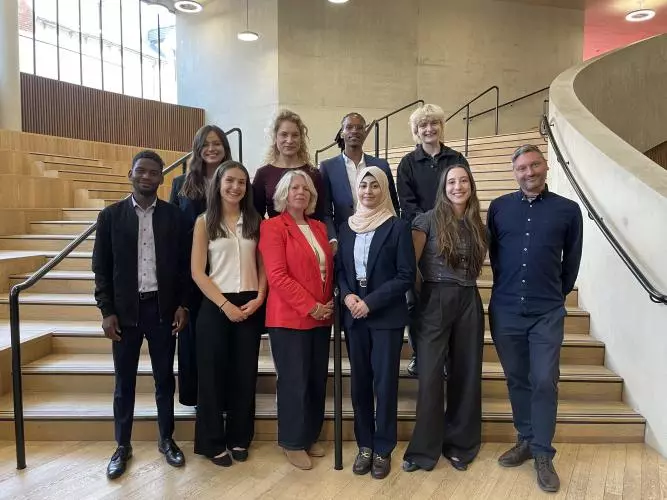
Panellists with representatives of the DSPI student teams
Students from DSPI's Evidence-Based Social Intervention and Policy Evaluation (EBSIPE) Master's and MPhil courses took on one of today's most widely debated policy questions in a three-day Integrated Policy Exercise (IPE): should social media be banned for under 16s in the UK?
The IPE gives students the opportunity to practice, draw upon and apply the analytical and evaluation skills developed during their studies at DSPI to a live policy issue before presenting their evidence-informed recommendations to policymakers, academics and local government working on the issue.
Working in teams, students explored the issue from different perspectives including:
- Mental health and addiction, physical health and wellbeing
- Violence, bullying, and victimisation
- Diversity, equity and inclusion
- Economic costs and benefits
- Young people's rights and autonomy
- Stakeholder (parents, teachers, social media companies, corporate sector) roles and attitudes towards social media use and bans
Over the course of the exercise, students identified the key issues, sorted and appraised the evidence, assessed the relevance of the evidence to the UK context, and developed nuanced, evidence-informed recommendations alongside plans for the evaluation of the recommend policies and interventions.
Panellist Dr Jon Reid, Chief Scientific Advisor for Oxfordshire's Local Policy Lab, commented: 'The students provided valuable critical insights when sharing policy recommendations. It was great to then have the opportunity to engage in more reflective group conversations where key findings were revisited and final policy recommendations were shared. Each presentation was very well considered and presented balanced considerations exploring some complex themes including, for example, autonomy and agency versus compliance and control.'
Wania Ahmad'It was particularly encouraging to see that every discussion placed the views, experiences and best interests of young people at its centre, recognising that they would be among those most affected.'
Fellow panellist, Wania Ahmad, member of the Youth Parliament UK, added: 'The session provided a valuable opportunity to engage in important conversations around the implementation of a social media ban and allowed for in-depth analysis of such policy from a range of perspectives. It was particularly encouraging to see that every discussion placed the views, experiences and best interests of young people at its centre, recognising that they would be among those most affected. I strongly support the recommendations put forward, many of which align with policy suggested by the Youth Select Committee and agree that a blanket ban on social media is not the right solution.'
Looking through the lens of Diversity, Equity and Inclusion, MSc student Shrutika Jha and team approached the challenge by asking themselves who benefits the most and who is most exposed to harm: 'Our key insight was that the effects of social media are not uniform - they are stratified. Marginalised groups often face greater risks online, but also rely more heavily on these platforms for support, identity formation, and access to information. This creates a real policy tension: interventions that reduce harm on average may unintentionally deepen existing inequalities.
'Instead of recommending a blanket ban, we proposed a more targeted approach focused on regulating harmful features, strengthening algorithmic accountability, addressing digital poverty, and investing in more inclusive, UK-specific research.'
Find out more about our Evidence-Based Social Intervention and Policy Evaluation EBSIPE Master's programmes in Programmes and Admissions