

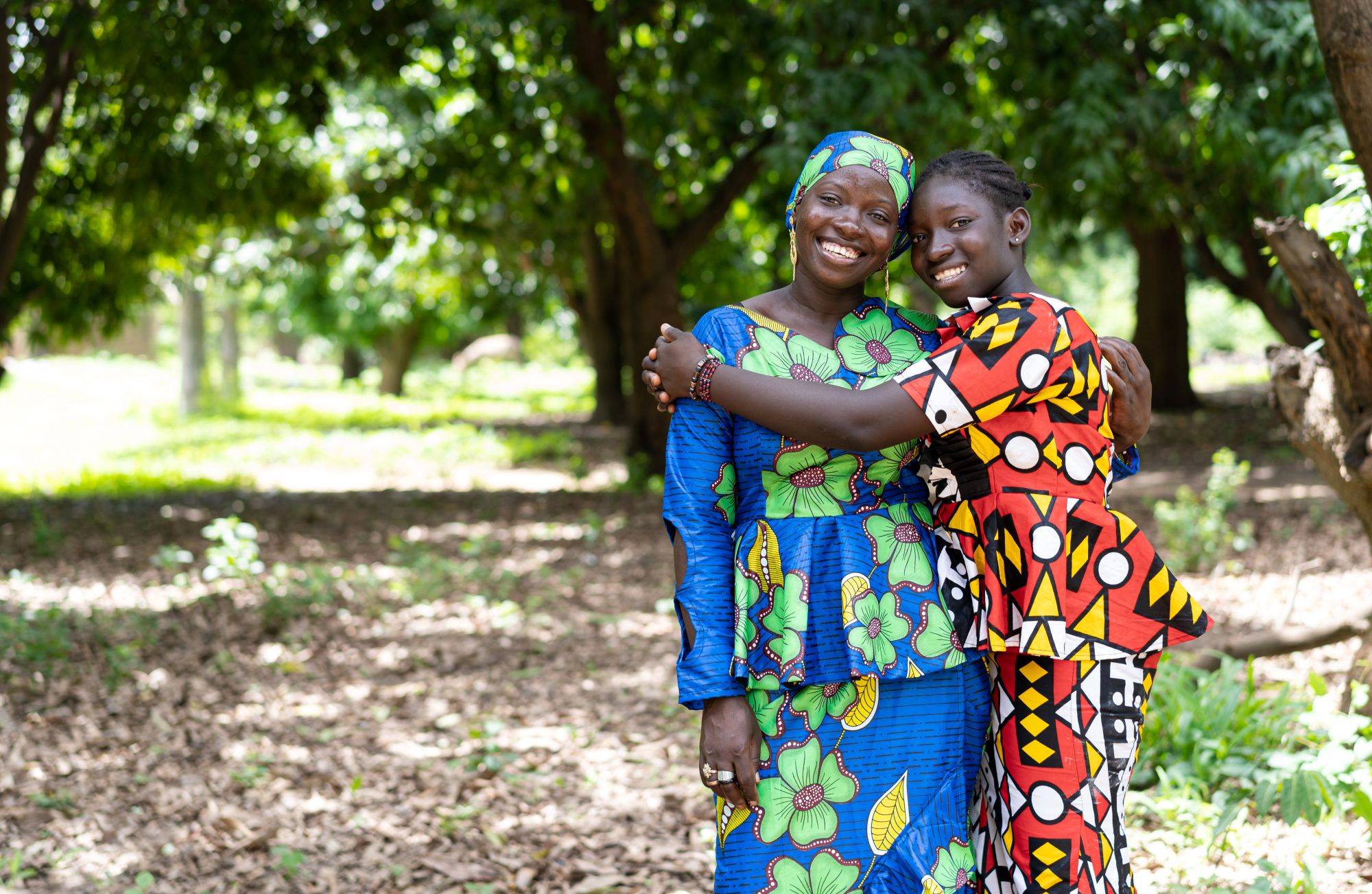
© Riccardo Niels Mayer / Adobe Stock
ParentApp for Teens in Tanzania
Principal investigators: Professor Lucie Cluver and Dr Joyce Wamoyi
Funded by: Trial funding was provided by UK Research and Innovation Global Challenges Research Fund, Oak Foundation, the LEGO Foundation, the European Research Council, and a family foundation that wishes to remain anonymous. Development of ParentApp was supported by World Childhood Foundation, Nuffield College, UK Research and Innovation International Science Partnership Fund, the Fell Fund, the Leverhulme Trust, the Agency Fund, UNICEF, The Human Safety Net Foundation, and a funder that prefers to remain anonymous.
Start date: 2019
Project outline
ParentApp for Teens is a blended-digital parenting programme for caregivers of adolescents aged 10 to 17. It supports caregivers to strengthen relationships with adolescents, use positive parenting strategies, improve family wellbeing, and reduce the risk of violence against adolescents at home and in the community.
ParentApp builds on the open-access Parenting for Lifelong Health programmes and was developed to make evidence-based parenting support more accessible and scalable in low-resource settings. Its development has included co-creation, user testing, feasibility and optimisation research across African settings, leading to a large-scale evaluation in Tanzania.
The Tanzania trial
A large cluster-randomised controlled trial tested ParentApp for Teens with 2,396 caregivers and adolescents across 80 communities in Mwanza, Tanzania. Participants were recruited in 2023 and followed for 18 months.
Families receiving ParentApp used a 12-module offline-first app, alongside an introductory in-person session and facilitator-led WhatsApp support groups. Families in the control group received a similarly delivered app providing water, sanitation and hygiene information.
The study examined whether ParentApp could help prevent sexual violence, child maltreatment and exploitative sex, alongside outcomes including family mental health, parenting and caregiver-adolescent relationships.
At the 14-month follow-up, adolescent girls in communities receiving ParentApp reported a 67% reduction in past-year sexual violence victimisation, a 54% reduction in past-month sexual exploitation, and a 51% increase in past-month positive parent–child relationships, compared with the control group.
Although the programme did not show statistically significant reductions in sexual violence or exploitation among boys, both boys and girls reported reduced exposure to high-risk situations for sexual violence.
ParentApp also significantly reduced physical and emotional child maltreatment and improved family wellbeing, including positive parenting, caregiver–adolescent relationships, caregiver and adolescent mental health, financial coping, family communication and social support. Female caregivers additionally reported a 10% reduction in intimate partner violence victimisation.
A companion economic evaluation published in Social Science & Medicine estimated that ParentApp could be delivered at approximately US$6 per caregiver–adolescent pair at scale, highlighting its potential as an affordable and scalable approach to preventing violence against children.
Read the studies: Trial findings (Cluver et al., 2026) | Economic evaluation (Ornellas et al., 2026).
Trial partners
The trial was conducted in collaboration with the National Institute for Medical Research in Tanzania, the University of Cape Town, UNICEF Tanzania, Parenting for Lifelong Health, IDEMS International, Clowns Without Borders South Africa and Investing in Children and their Societies.
The research forms part of the Accelerate Hub and the Global Parenting Initiative, an international collaboration generating evidence on scalable parenting support across the Global South.
Development and testing
The Tanzanian trial of ParentApp for Teens builds on several years of research and development exploring how evidence-based parenting support can be delivered through digital and blended approaches.
ParentApp for Teens was developed through consultation with international organisations, practitioners and researchers, followed by co-creation workshops with caregivers and adolescents from eight African countries and user testing with families across ten African countries.
This was followed by a feasibility study with caregivers and adolescents in South Africa; pre-post and qualitative research examining acceptability and cultural relevance in South Africa and Tanzania; a cluster-randomised factorial trial in Tanzania examining how to optimise engagement with the digital intervention; and the large cluster-randomised trial in Mwanza.
Together, this research has informed the programme’s content, design and delivery model, including the combination of offline-first app content, a brief introductory group session and facilitator-supported WhatsApp groups.
Read the studies:
Next steps
ParentApp continues to be adapted and evaluated as the research team explores how digital parenting support can respond to emerging risks and be used in different delivery systems and contexts.
Current work includes strengthening content addressing technology-facilitated and online sexual violence against children and adolescents, and exploring new ways to reach families at scale.
For information about plans to scale ParentApp to reach millions of families, visit Parenting for Lifelong Health.

Department of Social Policy and Intervention, University of Oxford
National Institute for Medical Research, Tanzania
- Kija Nyalali
- Samwel Mgunga
- Dr Mwita Wambura
University of Cape Town, South Africa
Clowns Without Borders South Africa
- Anna Booij
- Lindokuhle Ngcobo
University of Exeter, UK
- Professor G. J. Melendez-Torres
IDEMS International, UK
- Dr David Stern
Parenting for Lifelong Health, UK
- Professor Jamie Lachman
- Laurie Markle
Effectiveness
- Cluver, L. D., Ornellas, A., Klapwijk, J. M., et al. (in press). A blended digital parenting intervention for the prevention of sexual violence, exploitative sex, and maltreatment of children at scale in Tanzania: A cluster-randomised, controlled trial. The Lancet.
- Ornellas, A., Klapwijk, J. M., Nyalali, K., et al. (in press). Cost-effectiveness of a digital parenting intervention for reducing violence and related health burden among adolescents in Tanzania. Social Science & Medicine.
- Baerecke, L., Ornellas, A., Wamoyi, J., et al. (2024). A hybrid digital parenting programme to prevent abuse of adolescents in Tanzania: Study protocol for a pragmatic cluster-randomised controlled trial. Trials, 25(1), 119.
- Klapwijk, J., Melendez-Torres, G. J., Ornellas, A., et al. (2024). A hybrid digital parenting programme to prevent abuse of adolescents in Tanzania: Statistical analysis plan for a pragmatic cluster randomised controlled trial. Trials, 25(1), 446.
Development and optimisation
- Klapwijk, J. M., Ornellas, A., Mathaba, F., et al. (in press). “Please spend more time with us”: Qualitative insights into caregiver-adolescent meaningful engagement with Pan-African families. Family Relations.
- Janowski, R., Cluver, L. D., Shenderovich, Y., et al. (2025). Optimizing engagement with a smartphone app to prevent violence against adolescents: Results from a cluster randomized factorial trial in Tanzania. Journal of Medical Internet Research, 27, e60102.
- Janowski, R., Green, O., Shenderovich, Y., et al. (2023). Optimising engagement in a digital parenting intervention to prevent violence against adolescents in Tanzania: Protocol for a cluster randomised factorial trial. BMC Public Health, 23(1), 1224.
- Awah, I., Green, O., Baerecke, L., et al. (2022). “It provides practical tips, practical solutions!”: Acceptability, usability, and satisfaction of a digital parenting intervention across African countries. Psychology, Health & Medicine, 27(sup1), 107–123.
Commentary and wider learning
- Ornellas, A. (2025). Digital parenting interventions to prevent violence against adolescents: Lessons from the ParentApp for Teens trial for South African social work practice. Social Work/Maatskaplike Werk, 61(3), 672–676.
ParentApp programme resources, implementation and dissemination: Parenting for Lifelong Health